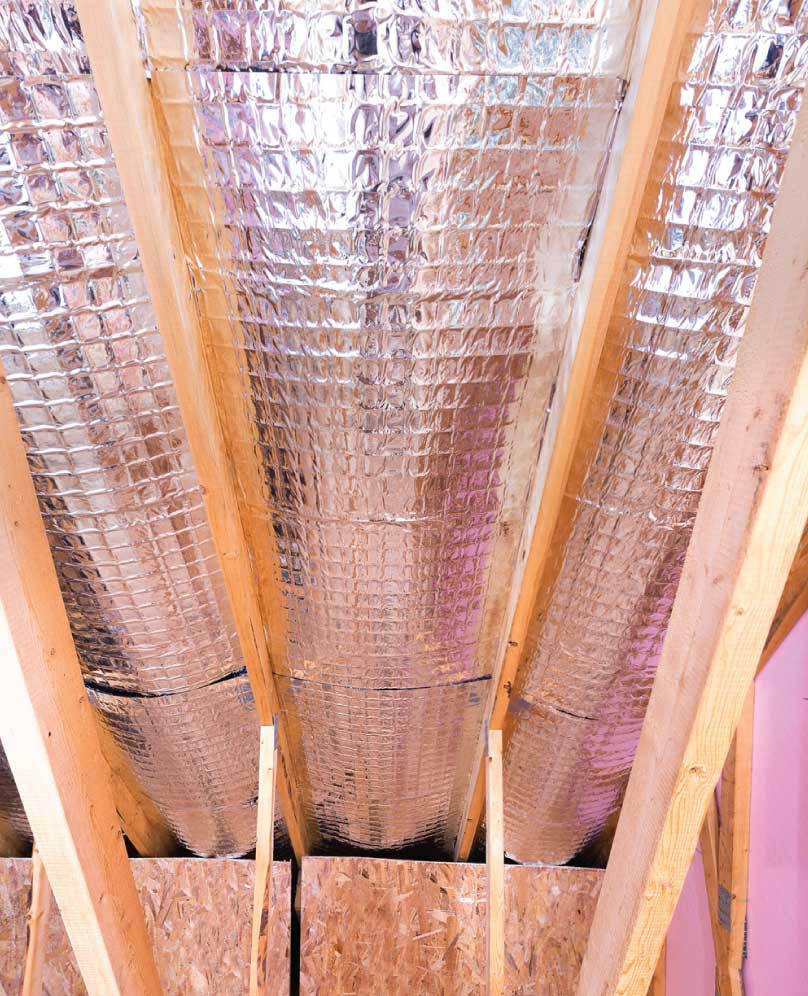
The real benefits of a radiant barrier in a Texas attic: cooler ducts, steadier upstairs rooms, shorter AC run times, and which homes gain the most from one.
Of all the attic upgrades a Texas homeowner can make, a radiant barrier is one of the quiet ones. Nobody sees it, it makes no noise, and once it's stapled up it needs nothing from you. But over a long summer of 100 degree days, it changes how hot your attic gets, and that ripples down to your AC, your ducts and the upstairs bedrooms.
Here's what a radiant barrier really offers, which homes gain the most, and where its limits are.
The main benefit is simple. A foil barrier under the roof deck blocks much of the radiant heat that would otherwise pour into the attic. On a sunny afternoon, attic air often runs noticeably cooler afterward. How much cooler varies widely from house to house, and it depends on roof color, ventilation, which way the roof faces and how the barrier was installed. If you want the physics, our article on how a radiant barrier works explains it.
In most Texas homes, the air handler and a long run of ducts sit in the attic. Even insulated ducts pick up heat when they're surrounded by 140 degree air, so the cold air leaving your AC shows up at the registers a few degrees warmer than it left. Lower the attic temperature and the ducts deliver cooler air. The system reaches the thermostat setting sooner and runs fewer minutes each hour.
This is where most of the savings come from. It's also why the Department of Energy points out that radiant barriers do the most good in warm, sunny climates when the ducts are in the attic, which describes a huge number of Texas houses.
Rooms with a lot of ceiling under the attic tend to be the warmest in the house. Think upstairs bedrooms, bonus rooms over the garage and rooms with vaulted ceilings. A hot ceiling radiates heat right down onto you. When less heat reaches that ceiling from above, those rooms hold a steadier temperature through the afternoon.
For families who've given up on a hot back bedroom, this is often the change they notice first, before the electric bill ever arrives.
The payoff is biggest when several of these are true:
The payoff shrinks in homes with spray foam on the underside of the roof deck, since that attic is already inside the insulated envelope. Homes with light-colored or reflective metal roofs also start with a cooler deck, though they can still see some gain. And a radiant barrier is mainly a summer upgrade. In winter its effect in Texas is small in either direction.
A radiant barrier is a good add-on, not a cure-all. It won't make up for thin or missing insulation, and it won't fix ducts that are disconnected or leaking at the joints. Those problems usually cost you more than radiant heat does, so they should be handled first or at the same time. It also won't do much for a house whose real trouble is a wall of west-facing windows or a worn-out AC.
Be wary of anyone who promises a radiant barrier will cut your bill in half. The Department of Energy's estimate for warm, sunny climates is about 5 to 10 percent of cooling costs, and real results depend on the house. That's still money worth saving over a Texas summer, as long as the expectations are honest going in.
A radiant barrier works well as one piece of an attic package. Topping up insulation to the R-38 to R-49 range that ENERGY STAR suggests for most of Texas, sealing leaks in the attic floor, sealing leaky duct joints and covering the pull-down stair opening with an attic tent all add up. Doing them on the same visit means fewer trips into a hot attic, and the barrier is easiest to install before deep new insulation covers the floor.
Planning a new roof? Ask about foil-faced roof decking if the old decking is coming off. It puts the barrier in place during the re-roof with no separate trip into the attic later.
Every attic is a little different. During a free home energy audit, Texas Energy Pros will look at your roof, ducts, insulation and ventilation and tell you plainly whether a radiant barrier is worth it for your house. Get in touch to set one up, or read more in our radiant barrier section.