San Antonio summers run long, and the nights don't cool off much. The attic over a typical house gets far hotter than the air outside, and that heat works down through thin insulation into rooms you're paying CPS Energy to cool. Most of our conversations start right there, over your head.
Hail is the other half of it. Spring storms with big stones cross parts of the city often enough that the roof you pick really matters. We'd rather help you choose a roof that takes a hit than patch the same one after every storm season.
Texas Energy Pros handles roofing, metal roofing, replacement windows and doors, siding, attic insulation, radiant barriers, spray foam and solar. Any of it can start with a free home energy audit, so you know where the house loses money before anybody hands you a price.
Listed roughly in the order we'd look at them on a typical Bexar County house.
If you can see the tops of the ceiling joists from the attic hatch, there isn't enough up there. ENERGY STAR suggests roughly R-30 to R-60 in this part of Texas when you're starting low. Blown-in insulation goes in fast and you feel it upstairs by August.
Insulation guidesPlenty of local houses run their ductwork through the attic. A radiant barrier under the roof deck cuts the heat radiating down onto those ducts. It does the most good in exactly this setup: a hot climate with the air handler up top.
Radiant barrier infoWhen a roof is near the end of its life anyway, we usually steer San Antonio owners toward Class 4 impact-rated shingles. They resist hail better than standard shingles, and some insurers give a discount for them. Ask your agent before you choose.
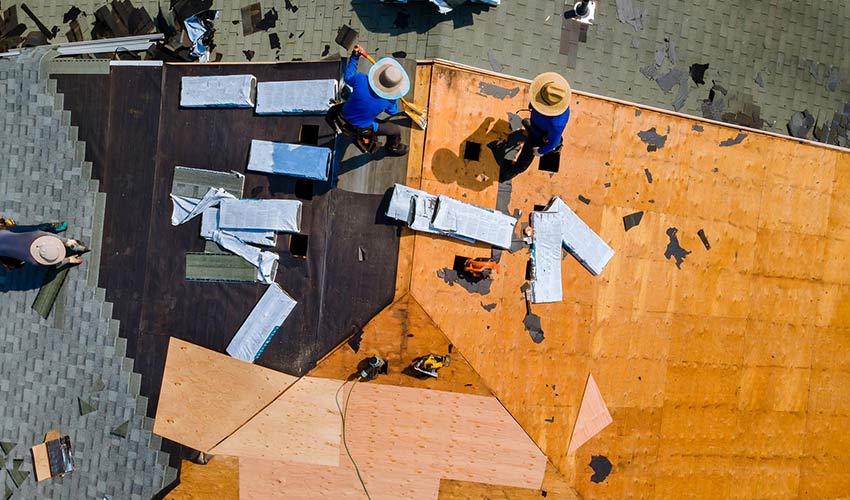
Roofing guidesHail damage doesn't always show from the yard. Bruised shingles and dented vents can sit for months and leak later. We'll walk the roof, photograph what we find and tell you whether it looks like a claim or just wear.
Hail damage helpWest-facing glass is the problem child in this city. Look for a low SHGC number, which blocks more solar heat, and a low U-factor, which slows heat moving through the glass. Older single-pane aluminum windows are the first ones we'd swap.
Windows and doorsA south or west roof without much live oak shade is a good start. We size a system from your actual CPS Energy usage and check whether the roof should be replaced first, so panels don't have to come off later.
Residential solarMost San Antonio homes get their electricity, and many get natural gas, from CPS Energy, which the city owns. That matters for upgrades because CPS Energy has run rebate programs for things like attic insulation, weatherization and solar. Check its current list before you buy, since what's offered and the rules for qualifying change from time to time.
Solar here comes down to your roof, your shade and how CPS Energy handles a system tied to its grid. We look at a year of bills first. If panels don't pencil out on your house, we'll tell you and point you at the attic or the windows instead. The federal residential solar tax credit ended for systems installed after December 31, 2025, so the savings have to make sense without it.
Both stand up to hail far better than a basic three-tab roof. Here's how they differ on a San Antonio house.
San Antonio's housing runs the whole range. If you live in a designated historic district like King William or Monte Vista, exterior changes go through the city's Office of Historic Preservation and need a Certificate of Appropriateness. Staff there often push to repair original wood windows instead of replacing them, so plan for that before you fall in love with a vinyl quote.
Out in the newer subdivisions past Loop 1604, the HOA usually has a say on shingle color, metal roofing and where panels can sit. Get the architectural request in early. In between, there are plenty of plain brick homes that just need a better attic, tighter windows and a roof that can handle the next storm.
Door knockers show up within a day or two of a big storm. Slow down and take it in this order.
Check gutters, downspouts, window screens and the fins on your AC unit for dents. If those took hits, the roof likely did too. Stay off the ladder.
Photograph the damage you can see and any hailstones you find. Note the date. Your insurer will ask.
Have a roofer walk the roof before you sign anything. We'll show you photos of what's actually up there, good or bad.
If the roof gets replaced, that's the moment to ask about impact-rated shingles, a radiant barrier or more attic insulation, while the crew is already there.
We'll check the attic, the ducts, the windows and the roof, then give you a short list in the order we'd tackle it.
Request a free energy auditCPS Energy has run rebate programs for attic insulation, weatherization and solar over the years. Programs and the rules for qualifying change, so look at its current list before you sign a contract. We can help you match a project to whatever is open at the time.
ENERGY STAR suggests about R-30 to R-60 for attics in this part of Texas if you're starting with little insulation. In practice, a lot of older homes here have far less, sometimes just a few inches of settled material. Adding blown-in insulation on top is one of the cheaper upgrades with a payoff you can feel.
Some insurers offer a discount for Class 4 impact-rated shingles, and some don't. Call your agent before you pick a roof and ask what paperwork they need. We provide the product information and installation details your insurer asks for.
Sometimes. Homes in designated districts like King William need a Certificate of Appropriateness from the city's Office of Historic Preservation for exterior changes. Staff often favor repairing original wood windows. Talk to them before you order anything, and we'll help with product specs if replacement is approved.
It depends on your roof, shade and usage. A clear south or west roof and high summer bills make a stronger case. Federal residential solar tax credits ended for systems installed after December 31, 2025, so we run the numbers without them and tell you plainly if they don't work.
In most San Antonio homes we'd start with the attic. Insulation and a radiant barrier cost less than a full window job and usually do more for summer bills. Windows come next, starting with the ones facing west.
We look at attic insulation depth, duct condition, air leaks around doors and windows, the roof and your recent bills. Then you get a short, ranked list of what would help most. There's no charge and no obligation to buy anything.
We work in the small cities around San Antonio and up the I-35 corridor toward New Braunfels.
