Where to use spray polyurethane foam in a Texas home: attics with ductwork, rim joists, kneewalls and remodels, plus spots to avoid and what a job involves.
Spray polyurethane foam can do things no other insulation can. It's also one of the more expensive ways to insulate and one of the hardest to undo. The smart way to use it is in the spots where its strengths, sealing air leaks and insulating in a single layer, pay off the most.
Here's how that plays out in Texas homes, from attics and walls down to the small jobs a homeowner can handle with a kit.
This is the big one in Texas. Most homes here have the air handler and ducts in the attic, which can top 140 degrees on a July afternoon. Even insulated ducts gain heat in that air, and every leaky joint pulls in hot, dusty attic air.
Spraying foam on the underside of the roof deck and the gable walls, then closing off the soffit and ridge vents, turns the attic into a semi-conditioned space. Attic temperatures end up much closer to the house temperature, so the ductwork runs in mild air instead. Open-cell foam is the usual choice here, often in the range of five to seven inches thick, though the depth should follow the local energy code and the product's specs.
A few things come along with this approach:
Two-story Texas homes have a rim joist between floors, and many have bonus rooms with short kneewalls along the attic edge. Both are notorious leak points. Batts stuffed into these spots rarely fit well and let air slide right past. A couple of inches of closed-cell foam, or a thicker layer of open-cell, seals and insulates in one step.
If you've got an upstairs room that runs ten degrees hotter than the rest of the house, the kneewalls and the floor above the garage are good places to look first.
When the studs are exposed, foam is easy to apply. In a gut remodel or an addition, open-cell foam in the wall cavities fills around wiring, boxes and plumbing without gaps. Closed-cell adds some racking strength and handles moisture better, so it shows up in exterior walls near the coast and in spots like the outside wall of a shower.
Finished walls are a different story. There are injection foams made for closed wall cavities, but they're separate products from SPF and need an installer who does that specific work. For most existing Texas homes, wall insulation comes after the attic and ducts anyway.
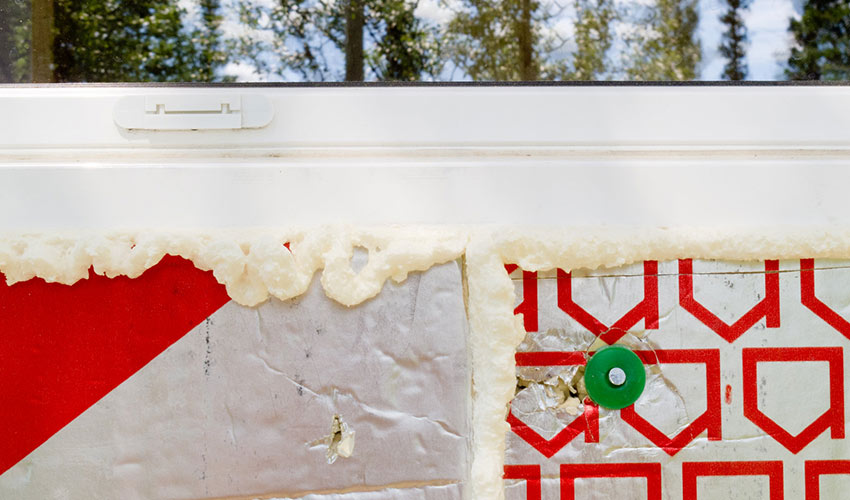
You don't need a spray rig for every job. One-part canned foam is fine for gaps around plumbing under sinks, wire holes in the top plates and the space around a dryer vent where it passes through the wall. Low-expansion foam made for windows and doors won't bow the frames.
Disposable two-part kits cover a few hundred board feet and can handle a rim joist or a short kneewall if you follow the directions closely and wear real protection: a respirator rated for organic vapors, goggles, gloves and long sleeves, with plenty of fresh air moving through. Past a small area, the cost of kits climbs fast and the mix quality gets harder to control. That's where hiring out makes sense.
Foam isn't a good fit everywhere. Keep these in mind:
On a typical attic job, the installers cover floors and furniture, mask off vents and lights, and park the spray rig outside. Occupants and pets leave for the spray and for the cure time the manufacturer lists, often a day or more. The installer checks thickness as they go, and you should see depth checks in several spots. Then the foam gets whatever ignition or thermal barrier the code requires for that space.
Good questions to ask any installer: which product and thickness they plan to use, how they'll handle gas appliances, whether the attic will need a supply vent or dehumidifier, and how they'll ventilate the house during curing. The chemistry behind those answers is covered in our article on what polyurethane foam is.
Spray foam pays off in the right spot and wastes money in the wrong one. Before you price out a job, take advantage of the free home energy audit from Texas Energy Pros. We'll check your attic, ducts and leak points and tell you plainly where foam belongs and where something cheaper would do. Contact us here, or read more in our spray foam section.