

Once the power fails, your windows start a clock on how long your home stays livable. That idea sat at the center of our look at the window countdown during outages, and it covered how glass sets the clock in both a July heat wave and a February freeze. Now comes the payoff. You can use that clock to make your backup power last.
The window ideas here were shaped with help from Blinds Chalet, whose know-how on shades, blinds, and shutters helped us show how simple window coverings change the way a room gains or loses heat.
Here is the core idea. Do not ask your generator or battery to cool or heat the whole house. Pick one room. Seal up its windows. Then let your backup power do one small job very well.
Why One Room Beats the Whole House
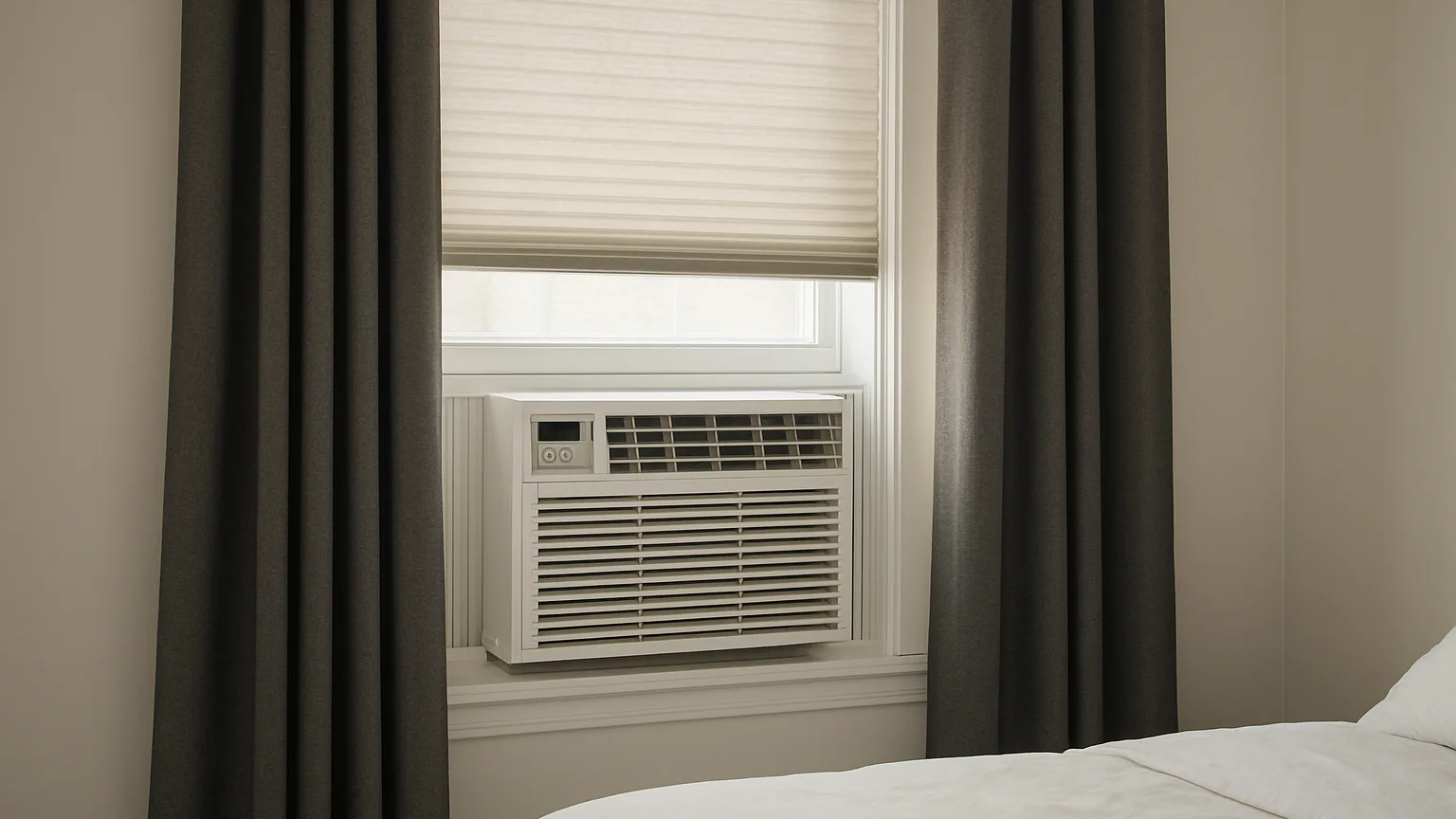
A central AC unit can pull 3,000 to 5,000 watts. Most portable generators and home batteries can't keep that running for long, if at all. A small window AC unit, by contrast, often draws around 450 to 600 watts. A space heater on low uses about 750 watts.
That gap is huge. But there's a catch. A small unit can only keep up if the room isn't fighting it. In most Texas homes, the windows are where a room leaks the most heat in summer and loses the most in winter. If the glass is bare, that little AC runs nonstop. If the glass is covered and sealed, it can cycle off for long stretches.
Every minute the unit rests is power saved. This is the same reason windows and energy efficiency go hand in hand on normal days. During an outage, it just matters a lot more, because your power supply has a hard limit.
How to Pick Your Refuge Room
Not every room makes a good shelter. Walk through your house before storm season and look for a room that checks most of these boxes:
- Few windows. One or two small windows beats a wall of glass every time.
- North or east facing. These rooms dodge the brutal afternoon sun in summer.
- Shares walls with other rooms. Inside walls act like a buffer against outdoor heat and cold.
- Close to your power source. A short path for a heavy extension cord or a nearby battery outlet keeps things safe and simple.
- Big enough for everyone. Count people and pets. Leave room for bedding.
- Near a bathroom. Every trip out lets warm or cold air in.
A guest bedroom on the north side is often a great pick. A west-facing living room with tall windows is usually the worst. If you have no perfect choice, take the room with the least glass. You can fix a lot with window prep, but you can't shrink a window.
Summer Prep: Keep the Sun Out Before It Gets In
Heat that passes through glass is hard to get rid of. So the goal is to stop it as close to the outside as you can. We covered the full set of tricks for beating midday heat buildup, but a refuge room needs a tighter plan.
Outside the Glass
Exterior shade screens, awnings, or even a light tarp tied off a few inches from the window can block most of the sun before it hits the pane. If you can only do one thing outside, shade the window that faces south or west.
On the Glass
Reflective film is cheap and fast to apply. The benefits of window insulation film show up in both seasons, since it slows heat gain in summer and heat loss in winter.
Inside the Glass
Blinds and shades are your last line of defense. Light colors and white backings bounce more heat back out. Fit matters more than people think, too.
"A blind that's jammed tight inside the frame can bow when the room heats up, and a bowed blind leaves gaps for sunlight to sneak through," says Marcus Ellison, senior window treatment specialist at Window Utopia, who has written about why snug blinds warp in hot rooms. For a refuge room, an outside mount that overlaps the frame often seals better and holds its shape.
Winter Prep: Turning Glass Into a Blanket
Winter is the opposite fight. Now you want to trap the warmth your space heater makes. Glass, even double pane, loses heat far faster than an insulated wall.
The trick is layers. Each layer traps a thin pocket of still air, and still air is a great insulator. Guidance from Blinds Chalet shaped much of this approach: the more closed layers you stack between the glass and the room, the slower the heat escapes.
Start with clear plastic shrink film on the frame. Add cellular or honeycomb shades if you have them. Then hang heavy curtains that touch the floor and wrap around the sides. If you're planning upgrades, fitted interior shutters make a strong winter layer. Like other custom-fit window panels, they close flat against the frame and block drafts better than loose fabric.
Don't forget the glass at night. Keep everything closed after dark. During a sunny winter day, open the south-facing coverings for a few hours to let free solar heat in, then close them before the sun drops.
What the Numbers Can Look Like
Let's run a simple example. Say you have a 13.5 kWh home battery. That's a common size for whole-home units.
In a winter outage, a space heater on low draws about 750 watts. In a bare, drafty room, it may run almost all the time. That uses the battery in roughly 18 hours, with nothing left for the fridge or lights. Now layer the windows and close the door. If the heater only needs to run about half the time, that same battery can keep the room warm for well over a day.
Summer works the same way. A 5,000 BTU window AC pulling about 500 watts in a sun-baked room may never shut off. Close hinged panels over that window outside and line it inside, and the unit might cycle off for 20 minutes out of every hour. Your real-world results will depend on insulation, outdoor temps, and the unit itself. Still, the pattern holds. Less load through the glass means more hours from the same power.
When you size a generator or battery, plan for the refuge room load, not the whole house. Add the fridge, a few lights, phone chargers, and any medical devices. You'll often find a smaller, cheaper system covers what you truly need.
Your Refuge Room Kit Checklist
Keep these items in one bin, ideally inside the room itself:
- Pre-cut window film or shrink kit sized to each window
- Painter's tape and a rolled towel for the door gap
- Thermal or blackout curtains with tension rods
- A heavy-duty, outdoor-rated extension cord
- A small window AC unit or a space heater with tip-over shutoff
- A battery-powered thermometer to track the room
- A carbon monoxide alarm with fresh batteries
A quick safety note. Never run a generator indoors, in a garage, or near an open window. Place it well away from the house and point the exhaust away from your refuge room.
One Room, Many Hours: Bringing It All Together
Riding out a Texas blackout comes down to a simple chain. Glass lets heat in during summer and out during winter. That leak sets how long a house stays livable. When you pick one room with few windows, shade it from the outside in summer, and stack snug layers over the glass in winter, you shrink the job your backup power has to do. A small AC or a space heater on low can then hold a steady temperature without draining your supply.
The right time to set this up is before the next storm warning, not during it. Choose your room, measure its windows, and pack a kit you can deploy in minutes. Then size your generator or home battery around that one comfortable space. Do that, and the next outage becomes a long, quiet night in a room that still feels like home instead of a race against a dying battery.