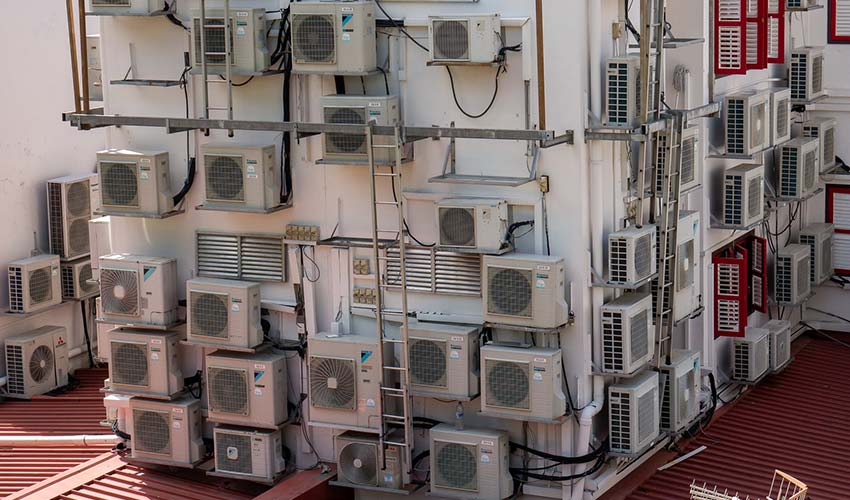
Before you book HVAC repair in Texas, check a few basics, learn how repair pricing works and know which questions to ask so you only pay for what you need.
The worst time to learn how HVAC repair works is 9 p.m. in August, with the thermostat reading 86 and climbing. You're hot, you're tired, and you'll agree to almost anything that brings the cold air back. Knowing a few things ahead of time keeps you from paying for a repair you didn't need, or putting off one you did.
Here's what to check before you call, how repair pricing usually works, and how to tell a fair recommendation from a sales pitch.
Plenty of service calls end with a technician flipping a breaker and charging a trip fee. Spend five minutes on these first:
If you find ice, switch the system off and set the fan to On for a few hours so the coil can thaw before the technician gets there. Running a frozen system can damage the compressor. For a few more fixes you can safely try yourself, see our page on easy DIY AC repair.
Most companies charge a diagnostic or service call fee to come out and find the problem. In Texas that's often somewhere around $75 to $150, and more on nights, weekends and holidays. Some companies apply the fee to the repair if you go ahead with it, so ask when you book.
Once the problem is found, you'll usually get a flat price for the job instead of an hourly rate. Very rough ranges you might see:
Prices move with the brand, the part, the season and how hard the equipment is to reach. An air handler wedged into a cramped attic takes a lot longer to work on than one in a hall closet.
A good tech won't mind explaining what they found. Ask what exactly failed, and whether they can show you. Ask if that part is the cause or a symptom of something else, like a capacitor that keeps failing because the outdoor coil is clogged. Get the total price in writing, including parts, labor and any refrigerant. Ask whether the new part is covered by the manufacturer and for how long. It's fine to ask to keep the old part, too.
Texas requires air conditioning contractors to hold a state license from the Texas Department of Licensing and Regulation, and anyone who handles refrigerant needs EPA Section 608 certification. You can ask for the license number and look it up online in a couple of minutes.
An air conditioner doesn't use up refrigerant. It circulates in a sealed loop. If yours is low, it's leaking somewhere, and topping it off every summer is like refilling a tire with a nail in it. A top-off can make sense as a stopgap on an old system you plan to replace soon, but you should know that's what you're paying for.
Older equipment adds a wrinkle. R-22, the refrigerant in most systems installed before about 2010, was phased out of new production in 2020. What's left is recycled or reclaimed, and it's pricey. Most systems from the 2010s run on R-410A, and new equipment made from 2025 on uses lower impact refrigerants such as R-454B or R-32 under EPA rules. When an R-22 system needs major refrigerant work, replacement usually starts to make more sense.
There's no single rule, but these signs lean toward replacement:
Some people use the $5,000 rule: multiply the unit's age by the repair cost, and if the answer tops $5,000, replacement deserves a serious look. It's a rough guide, nothing more. For a sense of what new equipment runs, read how much a new HVAC system costs or check our new AC unit cost page.
Most HVAC techs are honest people trying to get through a long, hot season. Still, be wary of anyone who recommends replacing the whole system before testing anything, or who pushes you to sign tonight to catch a special that expires at midnight. Yearly refrigerant top-offs with no talk of finding the leak are a warning sign. So is a quote with one big number and no breakdown, or talk of carbon monoxide danger without a reading from a meter. If something feels off, pay the diagnostic fee and get a second opinion. That fee is small next to a system you didn't need.
Repeat breakdowns sometimes come from the house, not the unit. An AC that runs all afternoon because of a thin attic or leaky ducts wears out faster. Texas Energy Pros offers a free home energy audit that checks the attic, ductwork and air leaks along with the equipment, so you can see whether a repair, an upgrade or both make sense. Contact us to book one.