What is an HVAC system? A plain look at the parts, how air conditioning moves heat out of your house, and the system types you'll find in Texas homes.
HVAC stands for heating, ventilation and air conditioning. In most Texas houses it's the biggest single user of electricity, and it's often the equipment homeowners know least about until something breaks. You don't need a technician's training to own one. Knowing the main parts and what they do, though, makes it a lot easier to follow a repair quote or compare replacement options without nodding along blindly.
This is the part that surprises people. Your AC doesn't create cold air. It picks up heat inside the house and carries it outside, using a fluid called refrigerant that circulates through a closed loop of copper tubing.
Inside, the refrigerant runs through a coil called the evaporator. It's cold and at low pressure, so as the blower pushes warm house air across the coil, the refrigerant soaks up that heat and turns into a gas. The compressor in the outdoor unit squeezes that gas, which makes it very hot. The outdoor coil, called the condenser, then sheds that heat into the yard while a big fan blows across it. That's why the air coming off the top of your outdoor unit feels like a hair dryer. Finally the refrigerant passes through a metering device that drops its pressure, it gets cold again, and the loop repeats.
There's a bonus. As house air passes over the cold indoor coil, moisture condenses on it, the same way water beads on a glass of iced tea. That water drips into a pan and runs out a drain line. In a humid Texas summer, pulling that moisture out matters almost as much as cooling the air.
A typical central system in Texas includes:
Where the indoor equipment lives matters. In many Texas homes, the air handler and most of the ductwork sit in the attic, which can top 140 degrees on a summer afternoon. That's a rough place for equipment, and every leak or thin spot in the duct insulation loses cooling to the hottest part of the house.
The heating half of the system comes in a few flavors. Many Texas homes with natural gas service have a gas furnace paired with a central AC. The furnace burns gas, and a heat exchanger warms the air without mixing in combustion gases, which vent outside through a flue.
All-electric homes often use a heat pump. It's the same refrigerant loop as an air conditioner, but it can run in reverse in winter, pulling heat from outdoor air and moving it inside. Heat pumps are very efficient in typical mild Texas winters. On the coldest nights they lose capacity, so most have backup electric heat strips in the air handler. Those strips work like a giant toaster and use a lot of power, which is one reason bills spiked for many all-electric homes during the February 2021 freeze.
Some homes have simple electric furnaces with heat strips only. A smaller number use dual fuel, a heat pump with a gas furnace as the backup.
The V in HVAC covers how air gets exchanged with the outdoors. In most homes that means bathroom exhaust fans, the kitchen range hood and whatever leaks in through gaps. Newer, tighter homes sometimes have a fresh air duct or an energy recovery ventilator that brings in outdoor air on purpose.
In Texas, outdoor air is often hot and humid, so ventilation has to be balanced against moisture. Some homes add a whole-house dehumidifier to handle the damp shoulder seasons, when it's muggy but not hot enough for the AC to run long.
The most common setup: an outdoor condenser plus an indoor furnace or air handler, connected by refrigerant lines.
Everything sits in one cabinet outdoors, on a pad or the roof, with ducts running into the house. You'll see these on some older homes and manufactured homes.
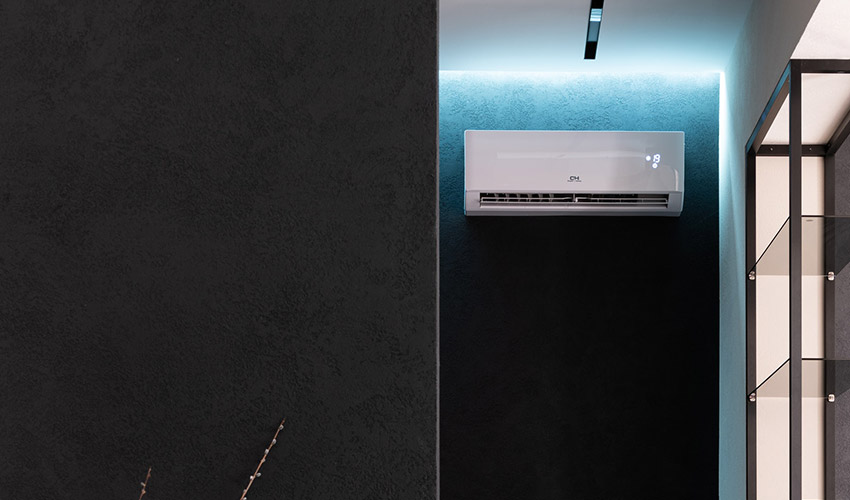
A small outdoor unit feeds one or more wall-mounted indoor heads. They're popular for garage conversions, additions and workshops where running ducts isn't practical.
Capacity is measured in tons. One ton moves 12,000 BTUs of heat per hour, and most houses use somewhere between 2 and 5 tons. The right size should come from a load calculation called a Manual J, which accounts for insulation, windows, orientation and air leaks, not a square-foot rule of thumb.
Cooling efficiency is rated in SEER2, and higher is better. Since 2023, federal minimums have been stricter in southern states like Texas than in the North. Heat pump heating is rated in HSPF2, and gas furnaces in AFUE, the percentage of fuel that turns into usable heat. A standard furnace is around 80 percent, and high-efficiency models reach the mid 90s.
For what these choices do to the price, see how much an HVAC system costs and our page on new AC unit cost.
If your system runs constantly, some rooms never cool down or the bills seem high for your house, the cause might be the equipment, the ducts or the house around them. Texas Energy Pros can look at all three during a free home energy audit. Contact us to schedule a visit.