
Metal Roofing in Jonestown, TX
Jonestown houses along FM 1431 and the slopes above Lake Travis take a lot of wind. Here's how a metal roof gets fastened to stay put, and what a steep lot does to the job.
Wind across open water
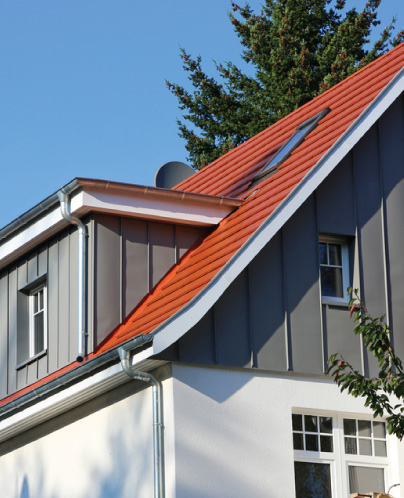
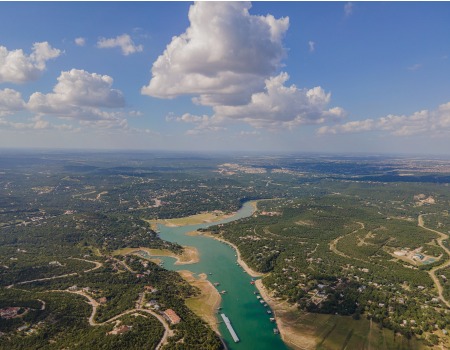
Plenty of Jonestown homes sit on slopes that face Lake Travis. Wind crossing the water has nothing to slow it down until it reaches the first row of houses, and a spring storm can gust hard. On a roof, wind doesn't so much push down as pull up. Air speeding over the ridge and around the eaves creates suction, and that lift is strongest at the corners, the rakes and the edges.
So the fastening plan matters more than the brand name on the panels. A proper metal roof is tested as a complete system, meaning panel, clip, fastener and deck together, to see how much uplift it can take.
How standing seam stays down
Standing seam panels are held by clips screwed to the deck and hidden inside the seams. Two things about those clips matter on a windy lot:
- Spacing. Uplift ratings come from tests such as UL 580 and UL 1897, and the results tell the installer how far apart the clips can go. Expect tighter spacing along the eaves, rakes and corners than in the middle of the roof.
- Movement. A long steel panel grows and shrinks with every hot afternoon and cool night. Floating clips let it slide slightly without tearing at the fasteners. Pinning long panels tight is how screws back out and holes stretch over the years.
Trim is the other weak point. Rake and eave trim hooked over a continuous cleat holds far better than trim tacked on with a few exposed screws, and the ridge cap needs proper closures and fastening, not a bead of sealant doing the work. Ask your roofer which uplift test the system passed and what clip spacing goes with it. If nobody can tell you, keep looking.
Steep lots change the job
A lot of lots here drop away from the street, so delivery and staging become part of the quote. Standing seam is often cut to length on site with a roll former or delivered as long single panels, and both need room to work and a reasonable path to the roof. Ask where the machine or the panel bundles will sit, whether the crew needs a lift to reach the low side of the house, and how they'll protect a terraced yard or a septic field if you have one.
Steep roofs on hillside houses also take more safety gear and more hours. That's normal. Just make sure it's written into the price instead of showing up as a change order.
Afternoon sun and the attic
Houses that face the lake often take full afternoon sun on the west side. A lighter or cool-pigment color keeps the panels cooler, and a vented ridge lets hot attic air escape. Jonestown's power comes from Pedernales Electric Cooperative, which opted out of retail choice, so using less is the main lever on the bill. If a lake-facing room still runs hot once the new roof is on, the AC may need service. For windows and the rest of the house, see our Jonestown page, and our metal roofing page goes through profiles and colors.
Our Service Area in
Jonestown
Metal roofing in other Texas cities
Schedule an appointment today
If you feel like you're spending too much on heating and air conditioning, a home energy audit by Texas Energy Pros shows you where the money is going.
